Exercise snacks: short vigorous bouts across the day
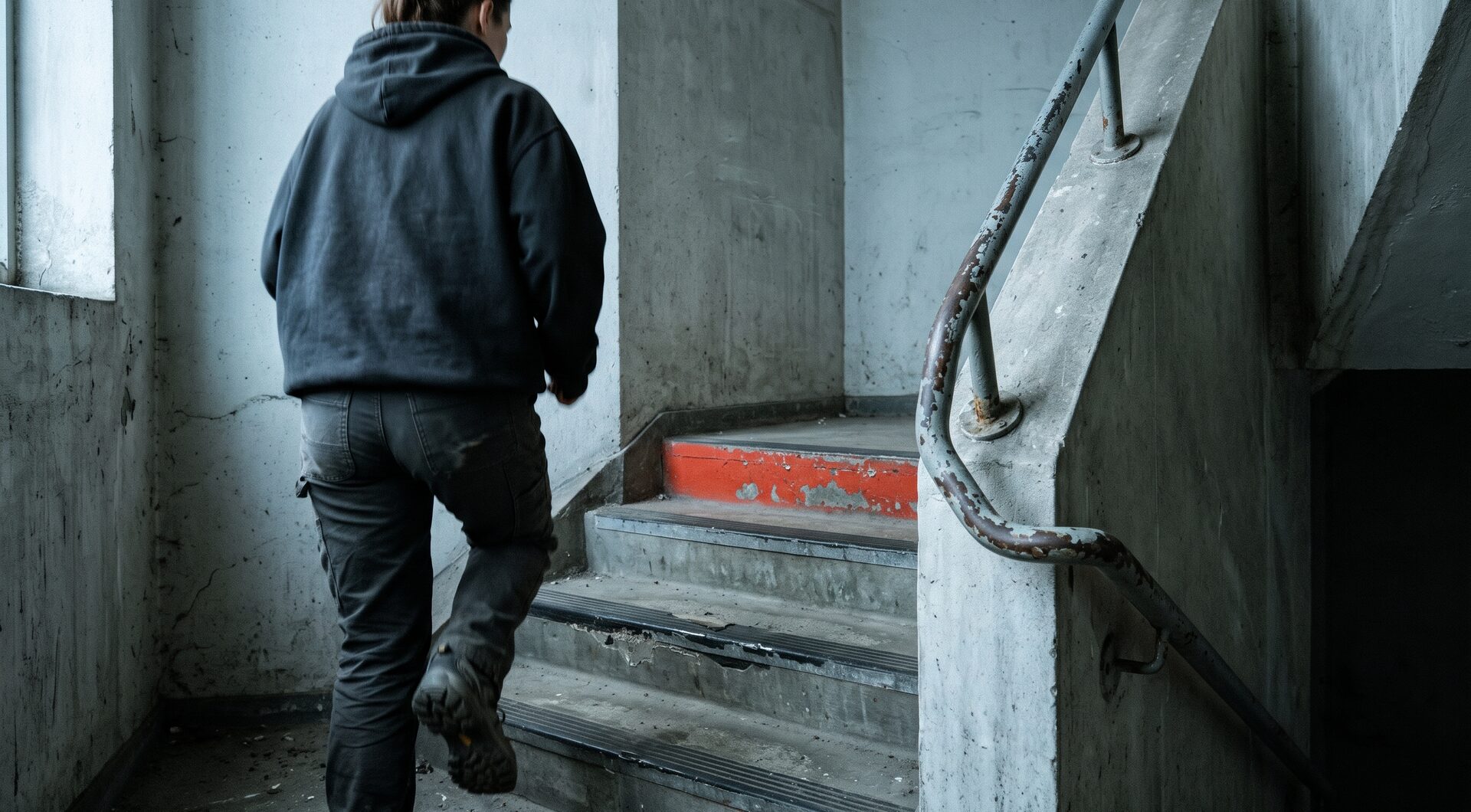
Tabata runs a 2:1 ratio: twenty seconds of work, ten of rest, four minutes end to end. An exercise snack keeps both halves and stretches the rest until it swallows the afternoon — twenty seconds of stairs, three hours of ordinary life, twenty seconds more. The interval survives. The workout stops being an event you schedule and becomes a thing that happens in passing.
The name does honest work. A snack is small, it sits between meals, and nobody changes clothes for one. An exercise snack is a single vigorous bout — one stairwell climb, one short surge on an afternoon walk, one set of chair squats while the kettle boils — repeated a few times across a day at intervals measured in hours. Researchers have taken the shape seriously enough to run controlled trials on it; the stair-trial authors called the fitness gains “modest” — their word — and the protocol they tested is pleasantly concrete: sixty steps, three times a day, one to four hours apart.
Concrete enough to time, in other words. That is what this piece is about: what the studies actually did, where the snack line runs, and how to hold the day’s doses in whole seconds instead of vibes.
What counts as a snack
A snack is single: one bout, then done, with hours before the next one. Within seconds you are breathing hard enough that sentences come out in pieces, and the whole thing lasts twenty seconds to about two minutes — an effort you could hold at that intensity, and nothing longer.
Vigor needs calibrating, because “hard” is doing a lot of work in that paragraph. The talk test is the cheap gauge: mid-snack you can produce a sentence, but a short one, and nobody wants to hear it. By the top of the third flight your legs are asking questions. Twenty seconds later you are recovered enough to keep walking, and inside two minutes you are back at the desk pretending nothing happened. If a bout leaves you crisp, it was a warm-up; if it wrecks the next hour, it was a workout, and you have drifted out of snack territory in the other direction.
“Exercise snacking” is the practice of stringing several of these into one day. The stair version has the deepest research trail, but the shape is indifferent to equipment: a hill, the flight in a parking garage, the chair you are sitting on. Lose the vigor and it is a break — fine, and your step counter already counts it. Effort is the ingredient that separates a snack from a stroll.
The young adults in the 2019 trial were sedentary, and that is also who the shape fits best. If your day is mostly sitting, with movement packed into two gym evenings, the hours between are exactly where snacks do their work. A delivery driver or a server already earns the day’s steps; for them a snack is one more demand on tired legs rather than a missing dose.
What the researchers tested
Three papers cover most of the ground.
The stair trial first. In 2019, in Applied Physiology, Nutrition, and Metabolism, sedentary young adults were split into two groups of twelve. Half climbed a three-flight stairwell — sixty steps — vigorously, three times a day, with one to four hours between climbs, three days a week for six weeks. Half changed nothing. The climbers’ peak oxygen uptake rose over the six weeks, and the size of the rise was modest.
Then the workplace version, from the same journal in 2024. Fourteen working adults, average age near forty, did the same three climbs of 53–60 stairs two ways: spread through the day as snacks, and packed into one structured HIIT session. Same stairs, same total work. Spread out, the effort felt lighter — perceived exertion rose less, and mood mid-climb was better — while enjoyment afterward was equally high both ways. When the work is identical, distributing it across the day buys comfort for free.
Last, the wide view: a 2025 meta-analysis in Frontiers in Cardiovascular Medicine pooled 27 studies and 970 adults. Across the trials, snacks improved maximal oxygen uptake, with smaller improvements in blood pressure, fasting glucose, and body-fat measures. Enough signal that researchers keep running the trials; not a personal promise. The authors note small samples, varied protocols, and low or moderate quality in most included studies.
The rest is the protocol
Look at what the stair trial prescribed: sixty steps, three bouts, one to four hours apart, three days a week. That is a work interval, a round count, a rest, and a weekly schedule — the four numbers an interval session is assembled from, with the rest stretched from seconds to hours. A snack is not interval training’s poor cousin. It is interval structure with the rest left to run long.
The stretched rest changes the timer’s job. Inside a tabata, the clock rules everything. Inside a snack, the clock rules the bout and nothing else. The sixty steps end at the landing — geography is the timer — but the time-shaped snacks want seconds: thirty of them for the chair, twenty for a hard pace. Set the bout once, save it as a named preset, and the phone stays face-down in a pocket while a voice cue calls the end of each dose over whatever is playing.
The spacing, the timer leaves to you. That part is older than any app: a snack between breakfast and lunch, another mid-afternoon, the last before the day ends. The trials spaced the doses because the spacing is the protocol — three climbs inside a single hour is one short workout wearing a disguise, and it bills you like one: you arrive at the afternoon sweating, needing a shower, and a real session would have done the job properly.
The hours between doses are the other half of the deal. A snack taxes you briefly because the rest around it is generous; shorten the rest and the effort has to shrink to match. The stair trial allowed up to four hours between climbs and no less than one. A workout asks you to clear time; a snack protocol asks you to clear attention, repeatedly, in small amounts.
And the 2019 trial trained three days a week. Even a dose this small came with days off: the prescription was three climbing days a week for six weeks, against a control group that changed nothing.
Three snacks, no equipment
Most of the published work sits on stairs, and they remain the best entry: one climb, done at a pace that has you breathing hard by the top.
| Snack | The bout | How to time it |
|---|---|---|
| Stairs | One vigorous climb, 3 flights (~60 steps) | The landing ends it. No preset needed. |
| Chair squats | 30 seconds of sit-to-stands, hands off the chair | 30 s work, 1 round, voice cue |
| The surge | 20 seconds of hard effort inside an easy walk | 20 s work, 1 round, cue over audio |
The three live in different rooms of a day. Stairs need architecture, the chair needs only itself, and the surge needs a sidewalk and a reason to be outside.
On form, briefly, because vigor plus bad form is just a faster way to learn a lesson. Chair squats: stand all the way up, sit all the way down, hands nowhere near the armrests; if thirty seconds of that is easy, you are not sitting down, you are hovering. The surge: pick a pace you could defend for about twenty seconds and no more — for most walkers that is a slow run or a hard march — and let the easy pace on either side be genuinely easy. Stairs police themselves: a climb of about sixty steps taken at “running late” speed is about the intensity the trials used.
Build the two time-shaped ones as presets once and starting one is a tap. Whole seconds, no decimals — an effort this short does not survive rounding debates.
Where the snack line runs
Two neighbors get confused with this, and each confusion costs you something.
The quiet one: desk-break complexes are movement for calendar gaps — structured, silent, designed so the 3:00 call arrives uninterrupted. A snack is the vigorous counterpart: you finish one breathing hard, and that is the point — do them where a little sweat is survivable. Both belong in a sedentary week. One keeps the body from seizing between meetings; the other is a training dose.
The bigger one: a day of snacks sits below a real training block on the menu. The stair authors called their rise modest, the meta-analysis pools small trials, and nothing in either paper builds strength the way loaded movement does. Snacks fill the spaces around proper sessions. And on a day that hands you one clear window, a ten-minute session run properly beats six doses scattered like crumbs.
Starting is a scheduling question, and the answer is boring on purpose. Tomorrow, between two morning tasks: one stairwell, or thirty seconds of the chair. After lunch, again. Before the kettle boils, a third. Count the day’s doses on one hand and stop there — the 2019 trial used three bouts on each training day. Its results do not establish greater benefits from a higher frequency.
Twenty seconds of work, three hours of rest. It reads like nothing until you notice three bouts on each of three training days, as in the 2019 trial, add up to nine bouts a week.
FAQ
What is an exercise snack?
One short, hard bout of movement — up a stairwell, or into a faster pace on your walk — repeated a few times a day with hours between. The effort is real but brief, and there is nothing to schedule, wear, or inflate. The name contrasts it with a full workout the way a snack contrasts with a meal.
How long should an exercise snack be?
Roughly twenty seconds to two minutes of hard effort. The stair trials used one vigorous climb of about sixty steps, three times a day. What carries the effect is the vigor plus the repetition across the day, so a longer, easier bout is a break, and a short, hard one is a snack.
Do exercise snacks actually work?
The trials report real but modest gains. A six-week stair study raised peak oxygen uptake in previously sedentary adults, and a 2025 meta-analysis of 27 studies with 970 participants found improvements in oxygen uptake and several cardiometabolic markers. Snacks fill a sedentary day, and they never stand in for a full training block.
What are good examples of exercise snacks?
Stairs: one vigorous climb of a few flights. The surge: a twenty-second stretch of hard effort inside an easy walk. Chair squats: thirty seconds of sit-to-stands without using your hands. Each bout ends when the time or the geography runs out, and the next one waits hours away.
The block between meetings, kept by a timer
Start a 45/15 cycle or a four-minute desk break when you decide to. A voice calls the switch, the screen stays off, no account needed.
Get it onGoogle PlayOn an iPhone? Leave an email and get one message when the iOS app ships.
One email only. Unsubscribe in one click.