Box breathing 4-4-4-4 on an interval timer
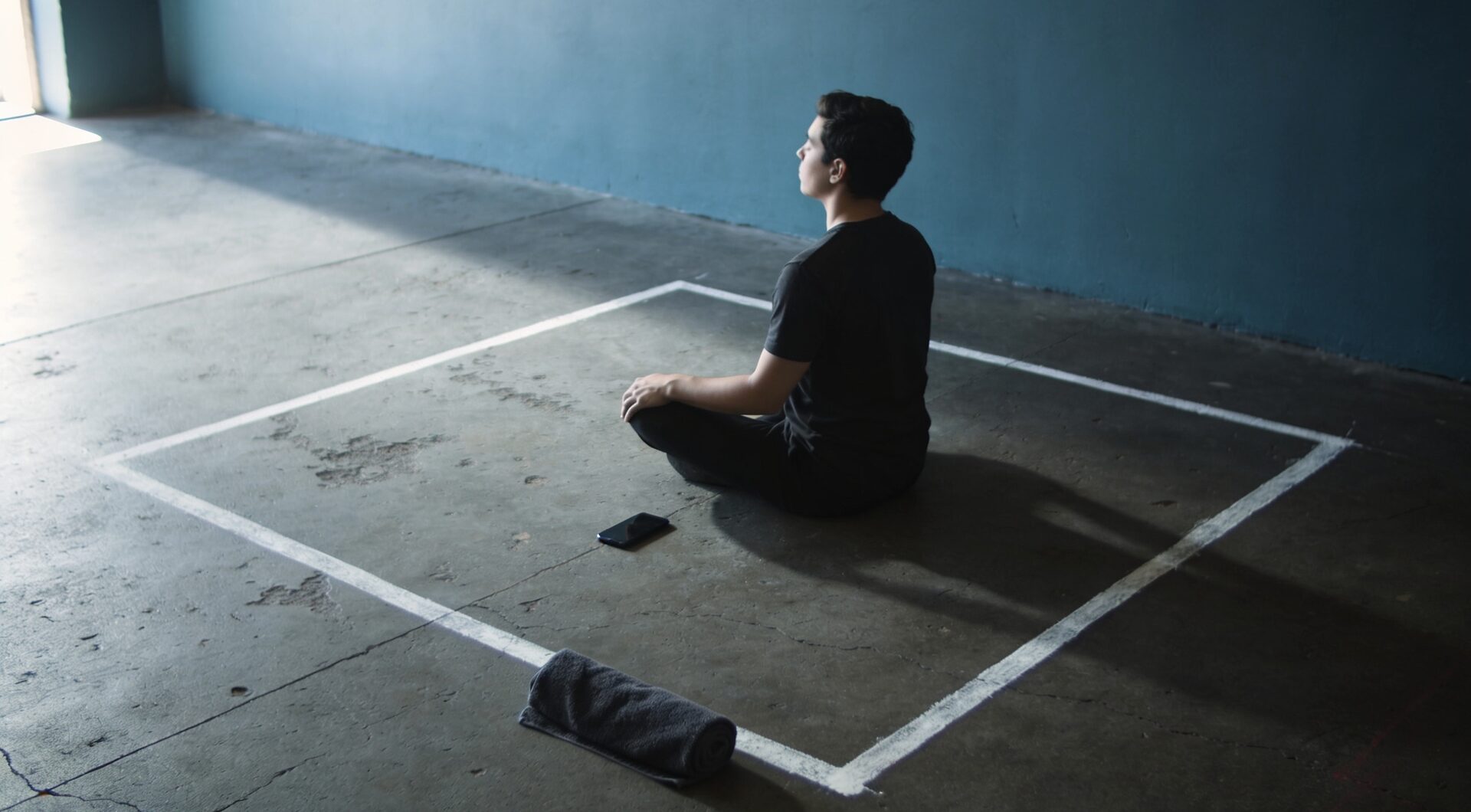
It breaks on the third lap. Inhale, four. Hold, four. Exhale, four. Hold, and somewhere inside the empty hold a question floats up: which side am I on? Nothing answers. The whole point of the exercise is that nothing is happening. No movement, no clock to glance at, no burning legs keeping time for you. The count you were keeping in your head slips out the back door while you wait, one eye opens to find a clock, and the lap restarts from zero.
The protocol itself fits in half a sentence: four seconds in, four seconds held, four seconds out, four seconds held. People download whole apps to display that square on a screen. What they are actually shopping for is the bookkeeping, because the box is the rare protocol whose hard part is not the breathing but the counting.
Four sides, sixteen seconds
The shape, plainly: inhale for four, hold for four, exhale for four, hold for four. One lap runs sixteen seconds, and the arithmetic stays clean at every scale you would actually use. Four laps is a touch over a minute. Sixteen laps is 4:16. Five minutes lands on eighteen full laps and three-quarters of a nineteenth. At sixteen seconds a lap you breathe 3.75 times a minute, below five to six breaths per minute.
The two holds feel different, and the difference matters. The first hold sits on full lungs and feels like resting. The second follows an empty exhale and is the one that asks for patience; if that hold stretches to six seconds, the square becomes a rectangle.
Sixteen seconds of structure runs on the whole-second arithmetic every interval session is assembled from. That is the quiet reason this protocol translates onto a timer with nothing lost, and the next section is the loud one.
The count is what breaks
In a hard interval, effort keeps the beat. Discomfort is loud, it arrives on schedule, and the timer only confirms what your legs already know. The box removes the effort and keeps the schedule, so nothing marks the phases except your own attention, which is the resource the exercise is busy using up. By the third lap the count has usually slipped a corner or two.
The failures run in a small set. The count derails and you lose your place. The phases drift long, so the box becomes a rectangle nobody asked for. Or you peek at a clock to check, which can interrupt your concentration. Every one of those is a bookkeeping failure, and bookkeeping is a machine’s job. A timer can handle the count here too.
On a work/rest interval timer, the box is already installed. Set work to four seconds and rest to four seconds, and repeat: inhale on a work interval, hold on a rest, exhale on the next work, hold on the next rest. The labels borrow gym vocabulary; the numbers are identical, and a sound cue at each corner means your eyes never have to open. Sixty four-second phases make four minutes: thirty work/rest rounds on the timer, or fifteen full breathing cycles. Save it once as a preset and starting it is a tap, after which the phone goes screen-down beside you and stops being part of the picture.
What the evidence actually supports
Box breathing itself has been studied. A 2023 randomized trial compared it with other breathing practices and mindfulness meditation, using five-minute daily sessions for a month. The box-breathing group reported better mood and less state anxiety after sessions. Heart-rate variability did not change significantly. Equal phase lengths were individualized rather than fixed at four seconds, so the study does not establish a special advantage for the exact 4-4-4-4 timing.
You can try a five-minute session when you want to settle before sleep or focus before training. The claims to skip are the medical ones — cortisol percentages, instant calm — which nobody needs repeated here.
Setting it up in whole seconds
The recipe, concretely. Work four, rest four. Thirty work/rest rounds for a four-minute block: sixty separate phases, fifteen breathing cycles and four minutes. A tone or voice cue at each corner, volume loud enough to hear over whatever is playing. Sit or lie down. You can close your eyes if you prefer, but that is optional. Choose a setting where you can focus on the exercise, rather than practising while driving. Shorten the phases if the holds require strain.
A short session is enough for a first try. Extend by laps rather than by mood: four laps, then eight, then fifteen. The phases stay whole seconds, since four is already as honest as a count needs to be. If you are unsure of your counting pace, check it against the cues.
Between rounds, and other neighbors
The boxing habit that rhymes with this: between rounds, a fighter sits on the stool, slows the breathing, and comes down a notch before the bell. The aims overlap, but the protocols are not necessarily the same. A timer built for rounds can also cue four-second breathing phases.
If you arrived here from cold water, cold immersion rounds touches breath control in a single line, because there the breathing protocol serves the round structure. On the floor, the breathing is the session. This post is the first spoke in a series about the timer drifting past the gym, and the closest sibling so far is 45/15 focus cycles, which runs the same machine on attention instead of breath.
Four sides, four seconds each, a tone at every corner. The breathing was always the easy part.
FAQ
What is box breathing?
Four phases of four seconds each: inhale, hold, exhale, hold. One lap is sixteen seconds, about 3.75 breaths a minute, and the equal sides are what make it a box. It also goes by square breathing. The idea is to slow the breath and keep attention on its structure long enough for arousal to come down.
How do you run box breathing on an interval timer?
Set work to four seconds and rest to four seconds, then repeat. Inhale on one interval, hold on the next, exhale, hold, and let a sound cue mark each corner. Thirty work/rest rounds contain sixty four-second phases: four minutes, or fifteen complete breathing cycles. Eyes closed, phone face-down, nothing to watch.
Is box breathing backed by research?
Yes. A 2023 randomized trial compared box breathing with other breathing practices and mindfulness meditation. The box-breathing group reported improved mood and reduced state anxiety after sessions. Equal phase lengths were individualized, so the result does not establish a special advantage for exactly four seconds per phase.
How long should a box breathing session be?
For a first try, four complete breathing cycles take 64 seconds. Eight take 2:08 and fifteen take 4:00. On a 4/4 timer, use twice as many work/rest rounds as breathing cycles. Keep the phases even; shorten them if you have to strain.
Time the hold. Keep your eyes closed.
Set a 30-second hold or a 4-4-4-4 breath once. A voice marks each change and a bell ends the practice, screen off. No account needed.
Get it onGoogle PlayOn an iPhone? Leave an email and get one message when the iOS app ships.
One email only. Unsubscribe in one click.